
Europe’s housing, climate and affordability challenges require us to make better use of the buildings we already have. Renovation can cut energy use, unlock housing capacity and improve comfort, health and long-term resilience.
Article contribution by VELUX, proud sponsor of Renovate Europe Day 2026.
Originally published on Rapporteur, November 5th.
Written by Fleming Voetmann.
Every year, Renovate Europe Day reminds us of a simple but often overlooked fact: Europe’s climate, housing and affordability challenges will not be solved by new buildings alone.
The most powerful resource we have is already standing.
Across Europe, policymakers are looking for ways to reduce energy demand, improve housing affordability, strengthen energy security and accelerate decarbonisation. These objectives are often discussed separately. Yet in practice, they meet in the same place: our existing buildings.
Three quarters of Europe’s building stock remains energy inefficient while 85% of the buildings we will rely on in 2050 have already been built. The question is therefore not whether renovation matters. The question is whether we are moving fast enough.
What makes renovation so important is that it can deliver multiple outcomes at once. A well-designed renovation can reduce energy consumption, improve health and comfort, strengthen resilience to heat, lower household costs and increase housing capacity. Few policy tools offer benefits across so many priorities simultaneously – with people at the core.
The technologies are available but people often do not know where to start. Building demonstration projects are therefore critical to showcase what’s possible already today and easy to replicate.
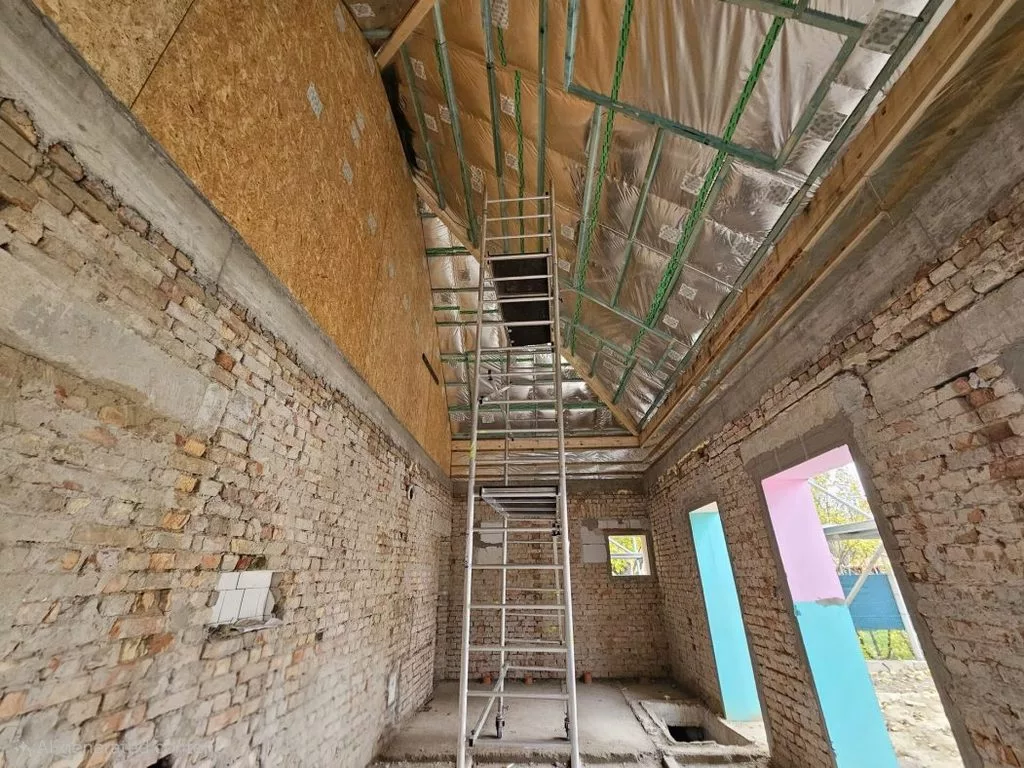
In Hungary, VELUX is currently supporting a renovation project targeting one of Central and Eastern Europe’s most common housing typology: the cube house “Kádár-kocka”. Nearly 900,000 of these homes exist across Hungary, representing around one fifth of the country’s housing stock. Similar buildings can be found across the wider CEE region. The aim of the project is to demonstrate how a highly standardised, energy-inefficient building type can be transformed into a modern family home through a renovation solution that is affordable, replicable and scalable. The pilot is expected to achieve an 88% reduction in energy consumption while improving daylight, ventilation and indoor comfort and expanding the home’s functionality for larger families. Works have just started and we aim to complete the renovation by Spring 2027.
The significance of this project goes beyond a single house.
It shows that renovation is not only about reducing emissions. It is about restoring value to existing homes and ensuring people continue living in buildings that already form the backbone of communities.
This perspective is increasingly relevant as Europe debates how to address both housing shortages and affordability concerns.
Too often, housing discussions begin and end with the need to build more. New construction will remain necessary. But it is not the only answer, and, in many cases, it is not the fastest.
This is also reflected in research by VELUX, BPIE and partners suggests that better use of existing buildings, vacant homes and underused spaces such as attics could, in theory, unlock between 50-107 million additional dwellings across Europe. While this potential will never be fully realised, the direction is clear: solving Europe’s housing challenge is not only about building more, but also about making better use of the space and buildings we already have.
The message is not that Europe should stop building. It is that we should renovate first.
Before expanding further outward, we should explore how to reclaim vacant homes, repurpose underused buildings, improve existing dwellings and unlock opportunities hidden in attics, rooftops and unused spaces.
Another plus: The infrastructure and neighbourhoods already exist. Renovation allows us to improve what citizens experience every day in their communities while making better use of our building stock.
Yet people do not judge renovation success in energy or CO2 emissions saved alone.
I’m convinced that the future success of Europe’s renovation agenda will depend on our ability to connect climate ambitions with everyday benefits that people can see and feel.
They experience buildings through comfort and wellbeing. They notice whether a home becomes unbearably hot during summer or cold during winter. They notice whether a renovation improves daily life.
To be able to better factor in these multiple benefits, we put forward the Healthy Buildings Framework with BPIE in the last edition of our Healthy Buildings Barometer. It contains five dimensions, i.e. sustainably built and managed; empowering people; improving mental and physical health; designed for human needs; as well as resilient and adaptive. In our upcoming edition, we will move from theoretical knowledge to assessing how our buildings actually perform on these dimensions, helping us draw evidence-based conclusions and identify the right policy recommendations. Stay tuned for more!
Renovation is often portrayed as a cost. We should start seeing it as an investment in resilience, affordability and quality of life.
Fleming Voetmann is Vice President for Public Affairs and Product Regulatory Affairs at VELUX.